





MARKET INSIGHT FOR THE WEEK ENDING
November 6th, 2026
THE LEAD STORY
10 best places to live in Canada for affordability and quality of life.
When it comes to buying a home, price is obviously a major consideration for Canadians. But affordability isn’t the only thing that matters. Factors such as quality of life, safety, employment opportunities and population growth can also play an important role in deciding where to put down roots.
While Toronto and Vancouver continue to be popular choices for many Canadians, their high housing costs have made homeownership increasingly difficult for many buyers. And they aren’t the only expensive markets. Despite a recent slowdown, the average home price across Canada was still $666,538 in September.
With interest rates rising to 2.5 per cent as of Oct. 28, along with continued economic uncertainty, prospective buyers are taking a closer look at where they can get the most for their money.
To identify the Canadian cities offering the best combination of affordability and lifestyle, real estate marketplace Zolo evaluated 36 cities and ranked them based on a range of criteria.
The study looked at much more than just housing costs. Household income, population growth, crime rates, unemployment, access to a primary healthcare provider, walkability and even the number of sunny days each year were all factored into the rankings.

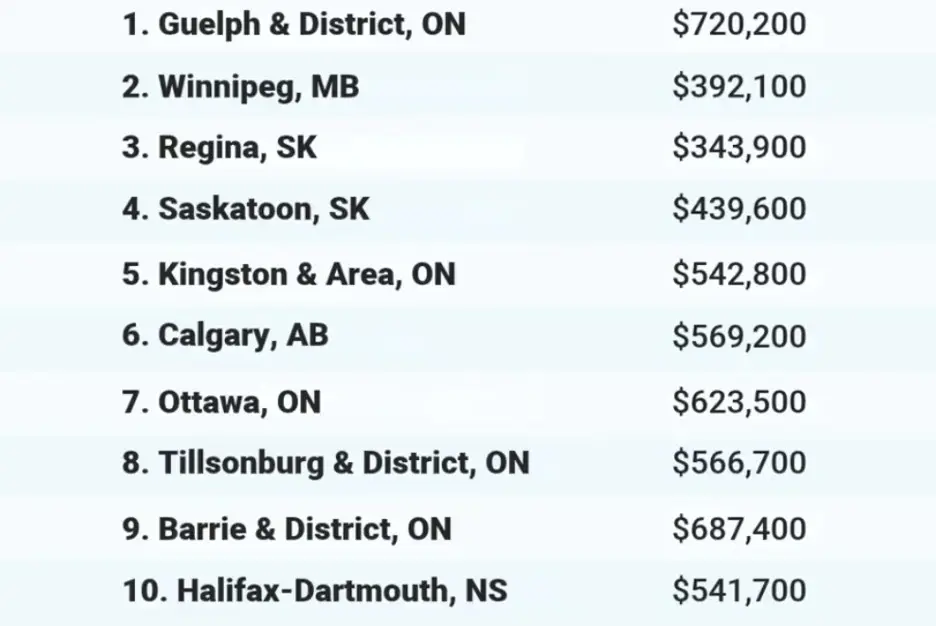
Benchmark price comes from the MLS® Home Price Index, often shortened to MLS® HPI. CREA (Canadian Real Estate Association) describes the MLS® HPI as a tool designed to gauge neighbourhood home price levels and trends, using more than 15 years of MLS® System data and statistical models to track typical homes across areas and property types.
Guelph, Ontario, takes the top spot as Canada’s best place to live.
Best known for its prestigious university, green spaces and craft brewery scene, Guelph scored well in several important areas. The city has a higher-than-average household income, along with lower-than-average unemployment and crime rates, making it an attractive option for those considering a move.
There is one drawback: housing isn’t cheap. The benchmark home price in Guelph was $720,200 in September 2026, making it the most expensive city among the top 10. However, its strong results across the other categories helped secure its number one ranking.
Although Guelph has a relatively modest population of about 165,588, many of the other cities making the top 10 are larger urban centres. Their appeal comes from a combination of solid job markets, higher-than-average household incomes and more attainable home prices.
Winnipeg, Man., comes in at number two, making a significant jump from eighth place last year.
Zolo reports that the cost of living in Winnipeg is nine per cent below the national average. The average household income is $99,600 per year, while the benchmark home price of $392,100 makes it considerably more affordable than Guelph.
Despite its reputation for bitterly cold winters, which have earned it the nickname “Winterpeg,” Winnipeg is actually one of Canada’s sunniest cities. Locals make the most of the outdoors, with plenty of parks, trails and lakes to enjoy.
Saskatchewan also makes a strong showing, with Regina and Saskatoon taking third and fourth place, respectively.
Regina stands out for its affordability, with home prices more than 47 per cent below the national average. Its benchmark price is just $343,900. Residents also benefit from a lower-than-average provincial income tax rate and the second-lowest sales tax rate in Canada, allowing their dollars to stretch further.
Halifax, N.S., rounds out the top 10, and one of its biggest advantages is walkability. The city received an impressive score of 97, well ahead of the other cities on the list, which generally scored in the 30s and 40s.
The average household income in Halifax is $98,900, slightly below Winnipeg’s. However, the city continues to attract new residents and is experiencing significant population growth. Its benchmark home price of $541,700 is also at its lowest level since December 2024.
Zolo notes that while Halifax home prices climbed sharply between late 2020 and early 2022, finding a more affordable property in the city is becoming easier as 2026 draws to a close.
THE TOP FIVE TRENDING STORIES OF THE WEEK
01
Canadians adapt their homeownership goals
An Ipsos survey for CENTURY 21 Canada finds 79% of Canadians still value homeownership, while 73% would make compromises to achieve it. Buying intentions rose to 23%, with first-time buyers making up 55% of likely purchasers. Smaller homes, fixer-uppers and shared purchases are helping buyers adapt to affordability pressures.
02
Inflation and borrowing costs weigh on GTA sales
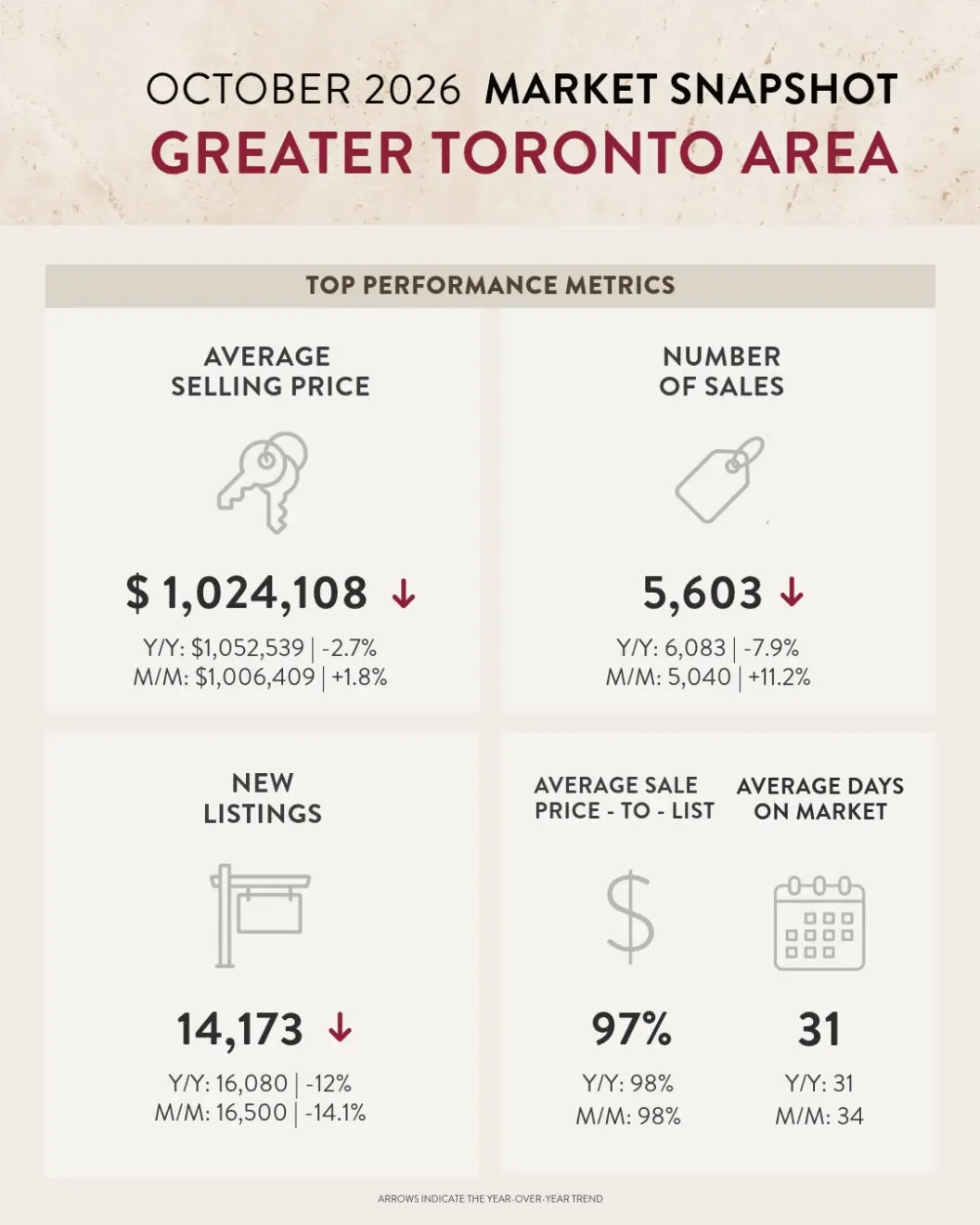
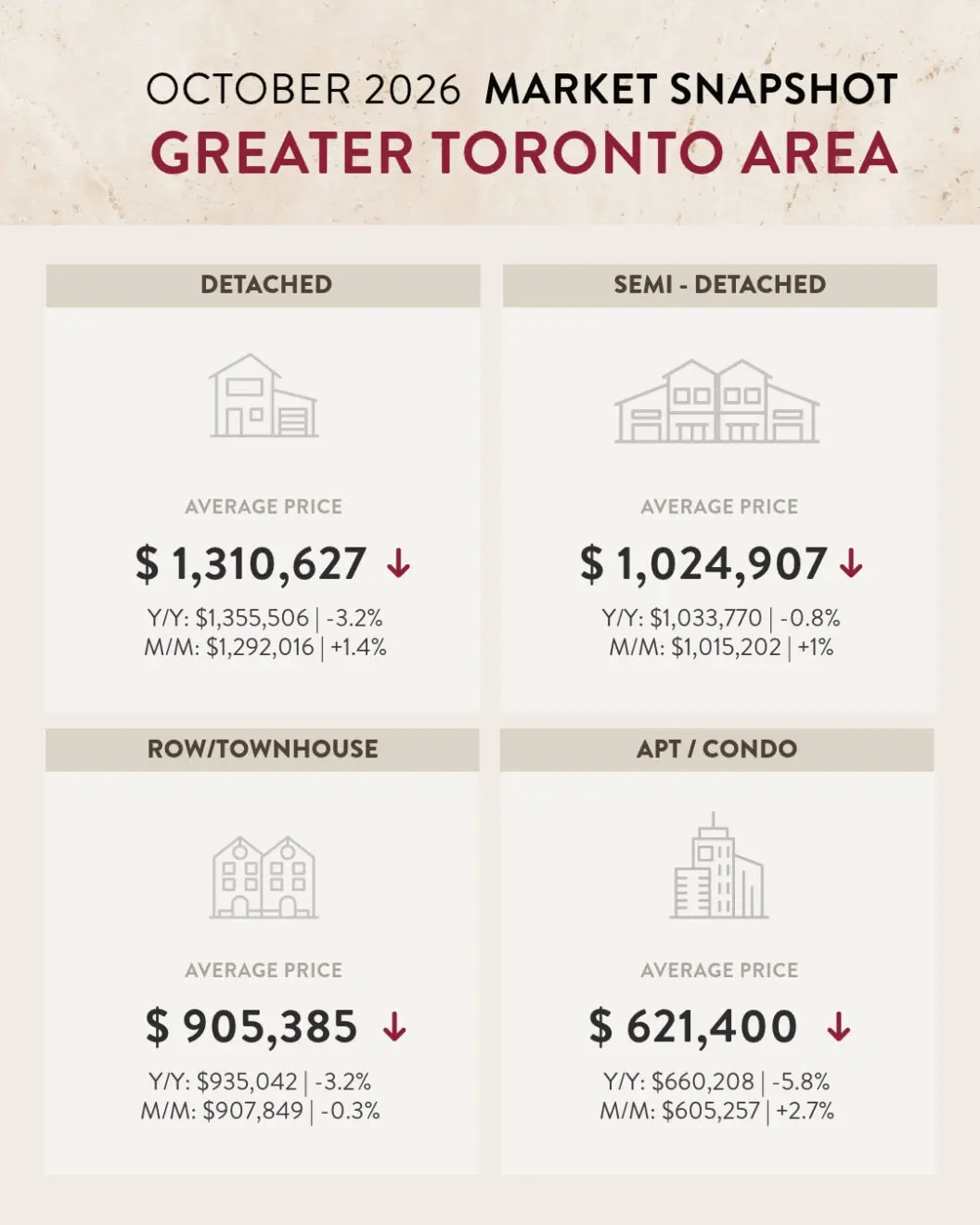
TRREB reported 5,603 GTA home sales in October, down 7.9% from a year earlier, as inflation and economic uncertainty kept buyers cautious. The average selling price fell 2.7% to $1,024,108, while new listings declined 11.9%. Lower prices continue to cushion borrowing costs and give buyers negotiating power.
03
Toronto homeowners face a vacant-home tax deadline
Toronto’s 2026 Vacant Home Tax declaration portal is open, with submissions due April 30, 2027. All residential owners must declare occupancy, including those living in their homes or claiming an exemption. Missing the deadline can result in a home being deemed vacant and charged 3% of its assessed value.
04
Bigger, more livable condos put buyers in control
At Toronto’s One Ten Avenue Road, about 45% of purchasers have combined units to create larger homes with personalized layouts. The approach reflects demand from residents seeking usable space, storage and outdoor areas. While customization is easier in luxury projects, it offers a lesson for a condo market weighed down by small investor-focused units.
05
GTA resale losses highlight growing mortgage pressure
Valery’s study found 24.8% of GTA resales sold below their previous purchase price, rising to 32% after transaction costs. Pandemic-era purchases and condos were especially exposed. CMHC expects Ontario mortgage arrears to keep rising through mid-2027, with financial pressure concentrated in the province rather than a nationwide mortgage crisis.
ABOUT BOSLEY REAL ESTATE LTD., BROKERAGE
Bosley Real Estate Ltd. is a full-service, 4th generation brokerage operating since 1928 with offices serving Toronto, Niagara, Waterloo Region, Southern Georgian Bay, St. Catharines, Northumberland, Cambridge, Kitchener-Waterloo (TrilliumWest) and Guelph (TrilliumWest). With over 340 agents in residential and commercial real estate, the firm has built a reputation on trust, respect, and integrity selling and leasing property throughout Ontario. Bosley Real Estate is also recognized internationally through an exclusive affiliation with Leading Real Estate Companies of the World®. This prestigious partnership connects the brokerage to a global network of 130,000 real estate professionals in 70 countries.
Headquartered in Midtown Toronto, President, and Broker of Record, Christan Bosley continues to innovate and maintains the high standard of excellence forged over a century.
OUR OFFICES
MIDTOWN TORONTO
103 Vanderhoof Ave., Toronto, ON M4G 2H5
416-322-8000
QUEEN WEST
1108 Queen St. W., Toronto, ON M6J 1H9
416-530-1100
DANFORTH
169 Danforth Ave., Toronto, ON M4K 1N2
416-530-1100
WATERLOO REGION
24 Queens Square, #201, Cambridge, ON N1S 1H6
519-740-9595
NIAGARA
233 King Street, Niagara-on-the-Lake, ON L0S 1J0
905-468-8600
NORTHUMBERLAND
160 Walton Street, Port Hope, ON L1A 1N6
905-885-0101
SOUTHERN GEORGIAN BAY
276 Ste Marie Street, Collingwood, ON L9Y 3K7
226-665-0222
ST. CATHARINES
200 Welland Ave., St. Catharines, ON L2R 2P3
905-397-0747
TRILLIUMWEST — GUELPH
292 Stone Road #7, Guelph, ON N1G 3C4
224-314-1600
TRILLIUMWEST — KITCHENER
240 Duke St. W., Kitchener, ON N2H 5C1
226-314-1600
TrilliumWest Real Estate Brokerage, Ltd., owned and operated by Bosley Real Estate.
Bosley Real Estate Ltd., Brokerage

The Bosley Advantage
Read about the heritage and innovation that form the foundation for Bosley’s industry-leading approach to real estate.